
Fry, Trowbridge and Associates helps individuals, farm families, and small business owners in La Grange, IN and across Michiana, in northern Indiana and southern Michigan, get caught up on unfiled tax returns. We find out which years the IRS, the Indiana Department of Revenue, and the Michigan Department of Treasury show as missing, pull your income records, and prepare and file every past-due return, including years the IRS has already filed for you.
One year or several, the first step is the same. Filing stops the late-filing penalty from growing and protects refunds you may still be owed. If you owe once the returns are in, we help you with that next.
People fall behind for ordinary reasons: a death in the family, a business that struggled, a move, or one year that turned into three. Here is where most cases start.
One return never went in, and nothing else is wrong. This is usually the simplest case. We confirm no other years are missing, prepare the return, and file it.
If you haven’t filed taxes in years, old W-2s and 1099s are often lost. The IRS keeps the income that employers, banks, and other payers reported under your Social Security number, and we use that record to rebuild each year.
A CP59 notice means the IRS has no record of a prior-year return it expected from you. Reminder letters such as CP515 and CP518 follow if it goes unanswered. We read the letter, confirm the year, and answer it with the return.
When a return stays missing, the IRS can prepare a substitute for return using only the income reported to it. It leaves out the deductions and credits you may be entitled to, so the bill is often higher than it should be. You can still file your own return for that year, and we prepare it.
Indiana’s non-filer program compares data from the IRS, the Bureau of Motor Vehicles, the Department of Workforce Development, and employers. Michigan Treasury sends its own notices. Each state expects its own return, separate from the federal one.
Schedule C and Schedule F filers, partnerships, and S corporations each have their own filing rules and deadlines. When the books are behind as well, our bookkeeping and QuickBooks team can bring them up to date before the returns are prepared.
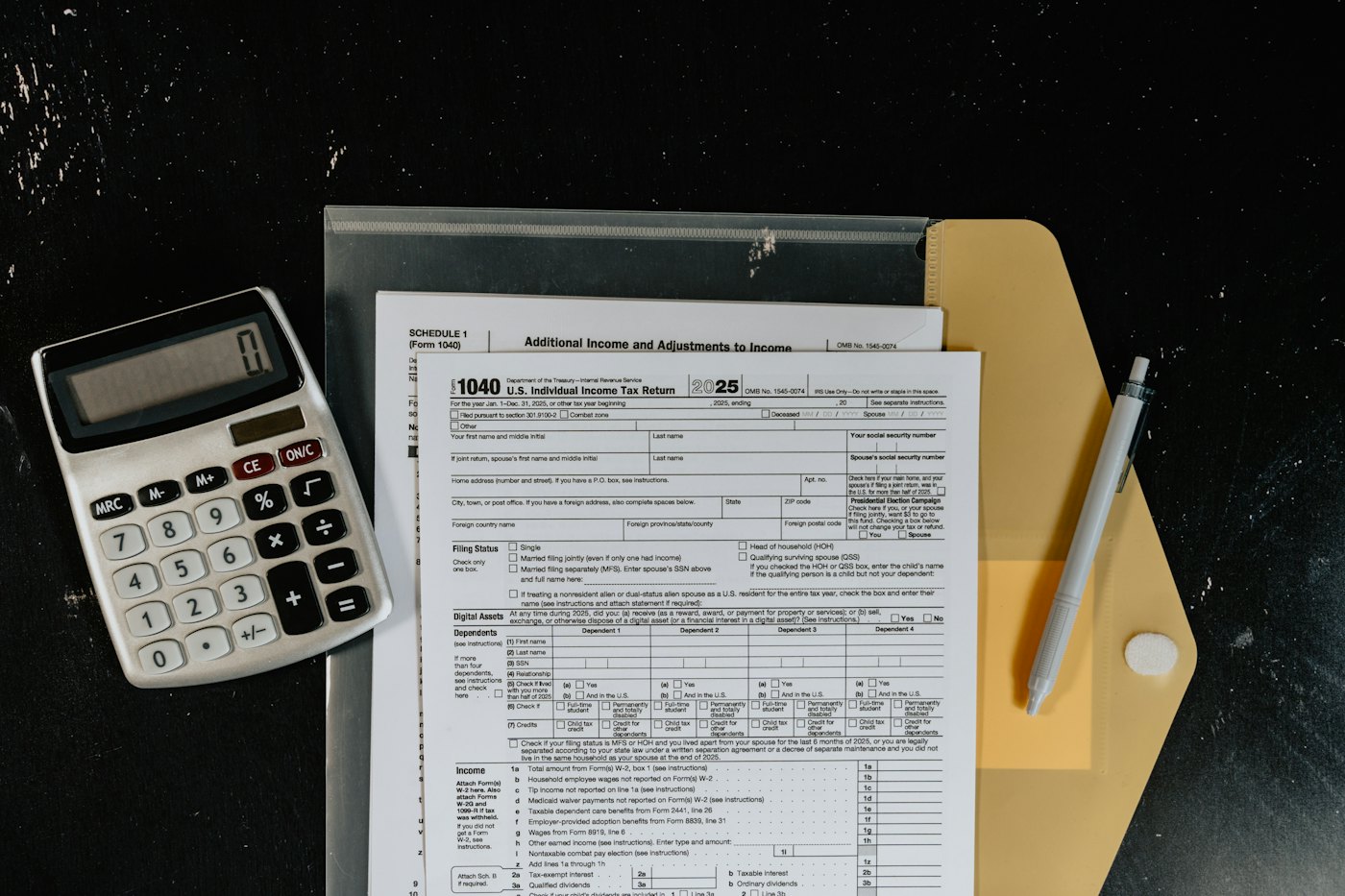
Every case follows the same five steps. Most of the work happens on our side, and we keep you posted as each year is finished.

You sign an authorization. With Form 8821, or a power of attorney on Form 2848, we can request your records and speak with the IRS for you. As CPAs, we can represent you before the IRS on any tax matter.
We pull your transcripts. The IRS wage and income transcript lists the W-2s and 1099s reported for the current year and the nine years before it. It does not show state withholding, so for Indiana and Michigan returns we also use pay stubs, employer records, or the state’s own account records.
We confirm which years need filing. IRS policy generally asks for the last six years of returns to put you in good standing, and it can ask for more in some cases. We confirm the exact years with the IRS and each state before preparing anything, so the work covers only the years that are actually required.
We prepare and file the past-due returns. Each year is prepared on that year’s forms and rules, and reviewed a second time before it goes out. When you’ve received a notice, the IRS asks that you file past due tax returns at the address shown on that notice, and we follow that.
We handle what each return shows. Refunds still within the claim window are claimed. If a year shows a balance, we explain your options before anything is due and help you set them up. Then we look at the current year, so you don’t fall behind again.
For the IRS, no clock runs on a year you never filed. The usual three-year window for the IRS to assess more tax starts only when a return is filed, so an unfiled year can stay open indefinitely. Indiana works the same way. What does run out is your time to claim a refund.
That is why it helps to think of three separate clocks:
| Clock | IRS | Indiana | Michigan |
|---|---|---|---|
| Time to assess tax | No limit until you file, then generally 3 years from filing | No limit on an unfiled return, under 45 IAC 15-5-7 | 4 years from the due date or the date you file, whichever is later, so an unfiled year generally stays open |
| Time to claim a refund | 3 years from the return's due date | 3 years from the due date | 4 years from the due date |
The third clock is collection. Once the IRS assesses tax, including through a substitute return it prepared, a 10-year window to collect begins. If that applies to you, our IRS back taxes and payment plan help covers what comes next.
While a return is missing, the federal failure-to-file penalty grows by 5% of the unpaid tax for each month, up to 25%. For a return required in 2026 that is more than 60 days late, the minimum penalty is $525 or 100% of the tax owed, whichever is less.
If taxes were withheld from your pay and you never filed, you may be owed money. These are the last days to claim it:
| Tax year | Return was due | IRS and Indiana refund deadline | Michigan refund deadline |
|---|---|---|---|
| 2022 | April 18, 2023 | Passed in April 2026 | April 18, 2027 |
| 2023 | April 15, 2024 | April 15, 2027 | April 15, 2028 |
| 2024 | April 15, 2025 | April 15, 2028 | April 15, 2029 |
| 2025 | April 15, 2026 | April 15, 2029 | April 15, 2030 |
When a deadline falls on a weekend or legal holiday, it generally moves to the next business day. Keep in mind that the IRS can hold a refund from a later year until a past-due return is filed, so one missing year can delay money you’re owed for another.
Both states run their own programs to find people who haven’t filed, and each expects its own return. A federal return alone does not clear a state notice.
If you lived in one state and worked in the other during the missing years, both states may be involved. We work out which return each year belongs on before anything is filed.
We prepare the IRS, Indiana, and Michigan returns for each missing year together, so the numbers match across all three and no state letter is left behind.
Once you sign Form 2848, we deal with the IRS directly on your behalf, including notices that arrive while the returns are being prepared.
Past-due returns are built from records that are often incomplete. A second reviewer checks each one before it is filed.
After the missing years are done, the people who caught you up can prepare next year’s return and, for business owners, keep the books up to date. That makes it much less likely you’ll fall behind again.
You can file a past-due return for any year, but the IRS generally asks for the last six years to consider you in good standing. It can ask for older years in some cases, such as when a large balance may be involved. Refunds are paid only for years still inside the claim window, so older returns usually close out the year without a refund.
Yes, if the year is still inside the refund window. For the IRS and Indiana, that is three years from the return’s original due date, so 2023 refunds can be claimed until April 15, 2027. Michigan allows four years. Once the window closes, the refund is lost, even if tax was withheld from every paycheck.
Filing your own return is usually worth it. A substitute for return uses only the income reported to the IRS and leaves out deductions, credits, and filing status choices that could lower the tax. When you file your own return for that year, the IRS generally reviews it and adjusts the assessment. We prepare that return and follow it through.
Yes. With your authorization we request IRS wage and income transcripts, which show the forms reported for the current year and the nine years before it. For self-employment or farm income, we rebuild the year from bank statements, sales records, and receipts. Transcripts don’t show state withholding, so we also look for pay stubs or employer records for the Indiana and Michigan returns.
For most people, filing late is a civil matter: the tax, interest, and any penalties. The IRS asks people to file every past-due return even if they can’t pay, and coming forward before more notices arrive keeps your options open. If your situation involves income that was deliberately hidden, we recommend speaking with a tax attorney first, and we can work alongside them.
No. Indiana’s Tax Amnesty 2026 ran from July 15 to September 9, 2026, and covered tax periods ending before January 1, 2024. It has now closed. Missing Indiana returns go through the regular process: file the return, then set up a payment plan for any balance if you need one. We can review your Indiana account with you.
Tell us which years you think are missing, or bring in the letter you received. We’ll find out what the IRS, Indiana, and Michigan have on record and give you a plan for each year.
Fry, Trowbridge and Associates · 800 South Detroit Street, La Grange, IN 46761 · (260) 463-2390 · Monday through Thursday, 8 a.m. to 4 p.m.
Reviewed by the CPAs at Fry, Trowbridge and Associates · Updated November 2026